
Todd County Arrest Records and Court Charges
An arrest record shows the custody event: booking, arrest date, charge summary, and where the person is held. The court charge record is created later, when the prosecutor files the formal charge with the court. That is why a person can appear on the jail roster before the court case is searchable, and why a court charge can exist even when the jail roster has already changed. The two records answer different questions and come from different offices.
The Sheriff's Office and the County Attorney matter most here. The Sheriff controls custody and records. The County Attorney handles local prosecution decisions. Court Administration holds the filed case record once the charge reaches court.
Source: Todd County Sheriff's Office.
The sheriff page is the county source for custody and records contacts, which is why it leads the arrest side of this topic.
How to Find Todd County Arrest Records and Charges
Start with the jail roster if you want current custody status, then move to MCRO if you want the filed court case. The jail roster can show booking information and current charges, while MCRO shows the formal charge and the docket history. If the person has already been charged, the criminal court page will have the fuller case view. If the issue is only the arrest side, the roster and sheriff records are the right starting point.
- Open the Todd County inmate records page for the current roster.
- Open MCRO Case Search for the filed case.
- Search by name or case number.
- Check the charge list, status, and hearing dates.
Source: Todd County Attorney office.
The county attorney is the office that turns an arrest into a formal charge in the court system.
How Charges Get Filed After an Arrest
The court charge record begins when the prosecutor files the complaint, information, or indictment. A complaint is common in routine criminal cases. An information is also a charging document used by prosecutors. An indictment is used in more serious matters when a grand jury is involved. Once filed, the charge becomes part of the court case and can be tracked in MCRO.
| Complaint | Information | Indictment | |
|---|---|---|---|
| Filed By | Officer or prosecutor | Prosecutor | Grand jury |
| Common For | Misdemeanors and routine criminal filings | Many felony cases | Serious felony cases |
| Effect | Starts the court charge record | Starts the court charge record | Starts the court charge record |
Source: Minnesota Attorney General release.
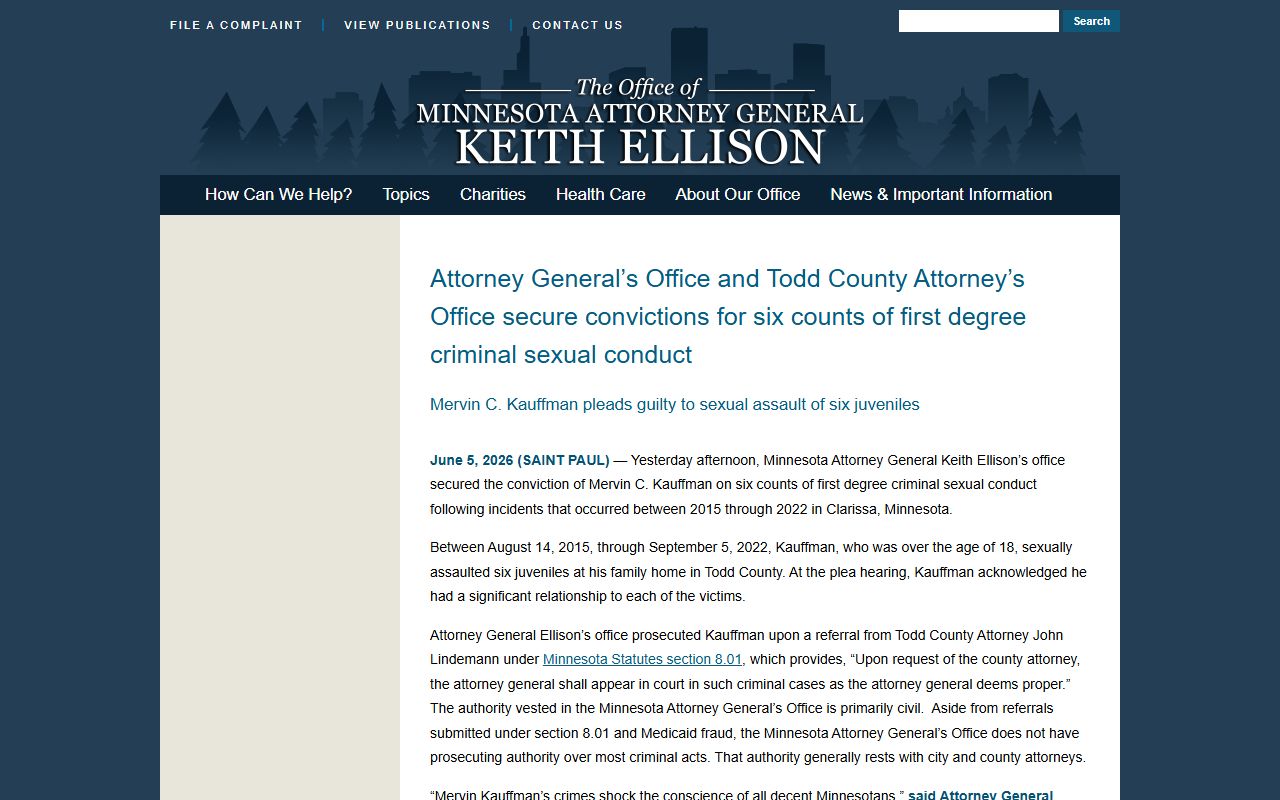
The Attorney General release shows how a Todd County prosecution can move through county referral into state-level action when needed.
Charge Status and What It Means
A charge can be pending, amended, reduced, dismissed, or resolved in several other ways. Some charges are separate from the arrest event itself, so one arrest can create more than one court charge. The court record shows the status changes over time, while the jail roster may move on to a different custody picture once the person is released, transferred, or sentenced.
| Status | What It Means |
|---|---|
| Pending | The charge is filed and still active. |
| Amended / Reduced | The prosecutor changed the charge level or language. |
| Dismissed | The charge was dropped or dismissed by the court or prosecutor. |
| Nolle Prosequi | The prosecution chose not to move forward. |
Source: Todd County daily inmate roster.
The roster is the booking-side companion to the court charge record, so it belongs on the arrest page rather than the criminal case page.
Charges vs. Convictions
The arrest and charge record can show an accusation long before the court decides guilt. That is why it should not be treated as a conviction list. The criminal court page carries the full case story, and the BCA criminal-history page carries the separate conviction-style state search. Keeping those records apart avoids over-reading a booking entry or a still-pending charge.
| Charge | Conviction | |
|---|---|---|
| Stage | Accusation | Verdict or plea |
| Burden of Proof | Probable cause | Beyond reasonable doubt |
| Public Record | Usually yes | Usually yes unless sealed or expunged |
Sealed vs. Expunged Records
Some arrest and charge records become sealed or expunged. That means they may disappear from ordinary public search results even though the underlying office still knows the record exists. Minnesota's expungement statutes explain when a record may be sealed and how the petition process works. Juvenile and restricted matters follow their own rules.
| Sealed | Expunged | |
|---|---|---|
| Visibility | Hidden from public view | Sealed under court order or law |
| Law Enforcement | Limited access | Limited access under statute |
| Process | Court order | Petition or automatic sealing rule |
Source: Todd County legal referrals.
The legal-referrals page is the county-side pointer to counsel when arrest and charge questions turn into representation questions.
Restricted Charge Records in Todd County
Juvenile matters, sealed files, pending investigative material, and some expunged records may not appear in the public portals. If a name search misses a record you expect, try the case number next. If that still fails, the file may be restricted or still in a pre-filing stage. The best next step is the Sheriff's Office or Court Administration, depending on whether you need the booking side or the court side.